Last Updated: October 23, 2026
Quick Summary
Durable handles for residential renovations are hardware that survives daily use without loosening, pitting, or failing. Choose the base metal by the door's job: Type 304 stainless for humid rooms, solid brass for even-wearing finishes, and cast aluminum for a strong, lightweight body that will not rust. Confirm a thru-bolt or back-to-back mount before you buy.
- Type 304 stainless steel is ideal for humid rooms and light scratches blend out with a non-abrasive pad.
- Die-cast zinc fails first: hollow sections crush under over-tightened screws and plated finishes blister.
- Lever handles offer more mechanical advantage with less grip force, reducing strain on the spindle and screws.
- Nearly every back-to-back pull in this guide fits doors 1-3/8" to 1-3/4" thick.
- Match the existing backset, bore, and center-to-center so you reuse the holes when replacing hardware.
Table of Contents
- Quick Comparison: Durable Handles for Residential Renovations
- The Best Material for Interior Door Handles
- Lever Door Handles for Home Use: Why They Win on Durability
- Door Handle Finishes for Home Interiors That Hold Up
- Door Hardware for High Traffic Areas
- Matching Handles to Your Renovation Room by Room
- Compatibility and Measurement Checks Before You Buy
- Frequently Asked Questions
Quick Comparison: Durable Handles for Residential Renovations
Durable handles for residential renovations are the hardware that survives daily use without loosening, pitting, or failing.
Here is the short list we would hand a homeowner or contractor before they order anything:
| Handle | Price | Best For |
|---|---|---|
| PULL715 Heavy Cast Aluminum Door Pull | $7.60 | Entry and utility doors |
| BDPUL6000 Flat Type Barn Door Pull | $7.50 | Barn and sliding doors |
| Solid Bar Pull Handle (Ellipse) | $28.95 | Modern interior doors |
| PULL-2815 Sliding Door Handle Pull | $48.90 | Closets and pantries |
| PULL-60 Sliding Door Pull Handle | $48.80 | Tight sliding doors |
| PULL-15778-BTB Back to Back Pull | $85.30 | Front and patio doors |
| SQP-012 Back to Back Square Pull | $85.50 | Modern and industrial interiors |
| 1007ADA Pull Plate Solid Bar | $79.00 | High-traffic entries |
| CRP150N Stainless Steel 304 Flush Cup | $49.25 | Pocket and cabinet doors |
| PULPL Aluminum Pull Plates | $24.40 | Retrofit pull plates |
Below, we break down which material actually holds up, how finishes fail, and how to measure before you order.

The Best Material for Interior Door Handles
The best material for interior door handles depends on where the door sits and how often it is used. The base metal determines how the handle resists corrosion, how it handles torque at the spindle, and whether the finish has anything solid to bond to.
Stainless steel. Type 304 stainless is ideal for humid rooms. Stainless is also repairable, light scratches blend out with a non-abrasive pad rather than exposing a different color underneath.
Solid brass. Brass is softer than stainless but machines cleanly and takes a polished or satin finish that wears evenly instead of flaking. Its weakness is dezincification in prolonged moisture, so unlacquered brass on an exterior door needs periodic waxing.
Cast aluminum. Cast aluminum gives a strong, lightweight body at a low price, the PULL715 is the example here, and it will not rust. The trade-off is that aluminum is softer than steel at the mounting points, so a cast aluminum pull relies on a thru-bolt or back-to-back mount to spread load rather than on the threads alone.
Zinc alloy and pot metal. Die-cast zinc is common in builder-grade knobs because it is cheap to cast into complex shapes. It is also the material that fails first: hollow sections crush under over-tightened screws, and plated finishes on zinc blister once moisture reaches the substrate. If a listing does not name the base metal, assume zinc.
A handle can look solid and still wobble because the spindle system, set screws, or mounting screws are undersized. A 5/16" spindle in a 1/4" bore, or a rose that is only surface-mounted, can loosen under thousands of cycles.
A quick field test: tap the underside of the lever or pull with a coin. A solid ring suggests solid or thick-walled construction; a dull thud usually means hollow die-cast.
Lever Door Handles for Home Use: Why They Win on Durability
Lever door handles for home use can offer more mechanical advantage with less grip force. That can mean less strain on the spindle and mounting screws every time the door opens.
For households with kids, older adults, or anyone with limited grip strength, levers are also easier to operate. A round knob forces your wrist to twist; a lever lets you push down. Over thousands of cycles, that difference can lead to less wear on the internal mechanism.
The one drawback: a lever can catch on sleeves and bags in tight hallways. If your hallway is narrow, look at a low-profile lever or a pull instead of a full-length lever.
Door Handle Finishes for Home Interiors That Hold Up
Matte black and satin nickel are two finishes that hold up well in home interiors, with satin nickel often performing well in high-moisture rooms. Both can hide fingerprints better than polished chrome, and both can wear more evenly when the base metal underneath is solid.
Here is how the common finishes compare in practice:
- Satin nickel: Soft sheen, hides scratches, good in bathrooms and kitchens
- Matte black: Bold look, popular on barn doors and modern interiors, shows dust more than satin
- Oil rubbed bronze: Warm, traditional, develops a patina over time
- Polished finish: Bright and classic, but shows every smudge and scratch
- Brushed stainless: Industrial look, very durable, common on commercial-grade pulls
The finish is only as good as the plating underneath. A premium finish on cheap pot metal will still flake. Match the finish across a room so replacement parts stay consistent.
PULL715 Heavy Cast Aluminum Door Pull →
Door Hardware for High Traffic Areas
Door hardware for high traffic areas needs three things: a heavy-duty body, a secure spindle system, and a mount that spreads the load across the door face. Entry doors, mudrooms, and family bathrooms take the most abuse.
For these spots, a pull plate can provide additional durability. The 1007ADA Pull Plate uses a solid 1" round bar on an 18-gauge plate and meets ANSI 156.6 for J401 pulls. The PULPL Aluminum Pull Plates also conform to ANSI/BHMA A156.6 and come packed with the handle, fasteners, and washers in one piece.

For heavy doors, the PULL715 includes a thru-bolt option for heavy-duty installation. That single detail can contribute to a handle that stays tight.
Matching Handles to Your Renovation Room by Room
Match handles to the room's job, not just its look. A bathroom needs corrosion resistance; a barn door needs a back-to-back pull; a front door needs a heavy-duty mount.

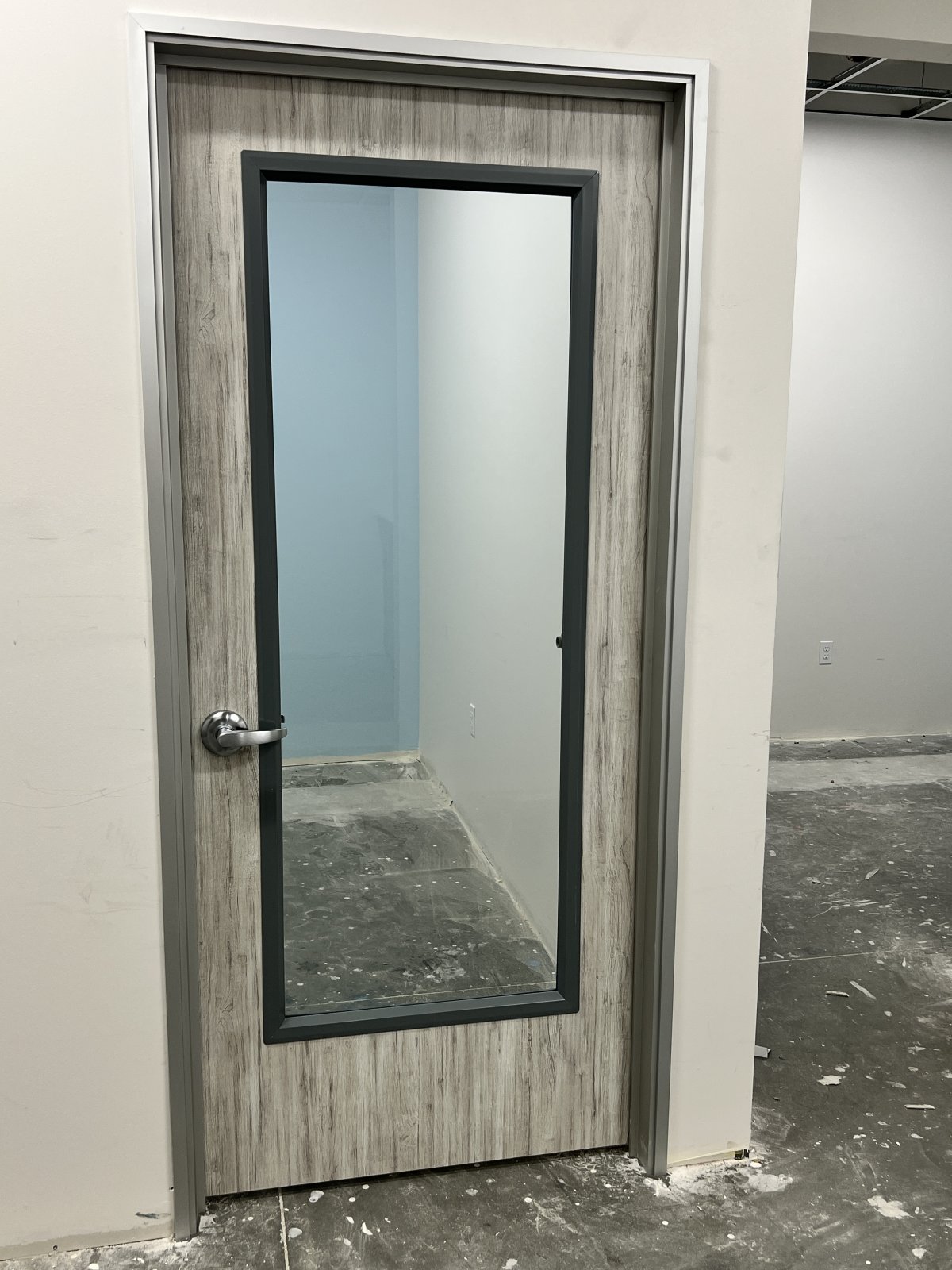
Bedrooms and bathrooms. Go with satin nickel or brushed stainless. The CRP150N stainless 304 flush cup works on pocket doors and stays rust-free in humid air.
Barn and sliding doors. The BDPUL6000 pairs a rustic hammered finish with back-to-back mounting for doors 1-3/8" to 1-3/4" thick. For a cleaner modern look, the SQP-012 square pull gives you a bold architectural profile in the same thickness range.
Closets and pantries. The PULL-60 is compact at 8-5/8" long, so it fits tight sliding doors without crowding the frame. The PULL-2815 offers a slightly longer grip in satin stainless, oil rubbed bronze, or black.
Front and patio doors. The PULL-15778-BTB is built from stainless steel with a 1" diameter tubular body and a 10" center-to-center mount, sized for wood, metal, and glass doors.
Compatibility and Measurement Checks Before You Buy
Measure door thickness and mounting centers before you order, because mismatches can lead to handle failures. Nearly every back-to-back pull in this guide is built for doors 1-3/8" to 1-3/4" thick. Measure yours with the door closed and the tape flat against the edge.
Then check the four measurements that decide whether a handle fits at all:
- Door thickness. 1-3/8" is the standard interior slab; 1-3/4" is the standard exterior and many modern interior doors. Back-to-back models list a range, and a door outside that range will not clamp.
- Backset. The distance from the door edge to the center of the bore hole. Residential doors are almost always 2-3/8" or 2-3/4". A handle or latch built for one backset will not line up with a door drilled for the other without a new bore.
- Bore diameter. Standard cross-bore is 2-1/8" and the edge bore is 1". A flush cup or pull plate that needs a different cutout means drilling or patching, so confirm before you buy.
- Center-to-center (CTC). The gap between mounting holes on a pull. The PULL-2815 uses 7-7/8", the PULL-60 uses 6-5/8", and the SQP-012 uses 11-7/32". Get that number wrong and the handle will not sit flush.
Spindle size and handing. For knob and lever sets, the spindle is the square bar that transfers rotation from the handle to the latch. Common residential spindles are 5/16" or 8 mm, and a spindle that is too small for the hub will round out and slip. Handing matters too: a lever set is left- or right-handed based on which side the hinge is on when you stand outside the room, and an incorrectly handed set installs with the lever pointing the wrong way. Reversible levers solve this, but not every model is reversible.
Replacement versus new bore. If you are replacing existing hardware, the cheapest path is to match the existing backset, bore, and CTC so you reuse the holes. If you are drilling fresh, pick the hardware first and drill to its template rather than the other way around. On hollow-core doors, a pull plate or back-to-back mount spreads load across the face and helps prevent the skin from crushing, a bare pull with wood screws alone can eventually pull through.
- Door thickness falls within 1-3/8" to 1-3/4" for back-to-back models
- Backset matches (2-3/8" or 2-3/4")
- Bore diameter matches (2-1/8" cross-bore, 1" edge bore)
- Center-to-center mounting distance matches the handle you picked
- Spindle size matches the hub, or the set is reversible
- Door material is listed as compatible (wood, metal, or glass)
- Finish matches the rest of the room's hardware
For material guidance, the ANSI/BHMA standards for door hardware set the reference benchmarks that quality pulls are tested against. The U.S. Department of Energy guide to home renovations is a useful starting point for planning a whole-house upgrade. And the ADA Standards for Accessible Design explains why lever-style and pull hardware are preferred for accessibility.
Frequently Asked Questions
Are lever handles more durable than door knobs?
Lever handles can offer an ergonomic advantage in daily use because you push down rather than grip and twist. That motion can put less strain on the spindle and internal mechanism. For high traffic areas like hallways and kitchens, a solid lever handle with a secure spindle system can be a reliable long-term pick.
What is the best material for interior door handles?
Stainless steel and solid brass are durable choices for interior handles. Stainless steel resists rust and holds its shape under heavy use. Solid brass takes finishes well. Aluminum is an option that works for lighter residential use. Hollow or plated base metals in rooms with constant traffic can experience finish wear that exposes the core.
Which door handle finish holds up best to daily use?
Satin nickel and satin stainless steel can hide scratches and fingerprints better than polished finishes, which can help them look newer for longer in busy rooms. Matte black is popular for modern style, but it can show wear on edges over time. Polished finishes look sharp but may need more wiping. For a bathroom or kitchen, a corrosion-resistant finish is important, so check that the base material is stainless or brass before choosing the color.
Can I replace a door handle without replacing the lock?
You can often swap the handle or pull without touching the lock, especially on sliding and pocket doors where the pull is a separate surface-mounted piece. For standard swing doors, the handle and lockset are often one unit, so replacing the handle may mean replacing the lockset. Measure the door thickness and the existing bore spacing before you buy, and confirm the new hardware is rated for doors between 1-3/8 and 1-3/4 inches thick, which covers many residential doors.