Table of Contents
- Understanding Door Hardware for Institutional Buildings
- Commercial Door Lock Types and Selection
- Fire Door Hardware Requirements
- ADA Compliant Door Hardware Requirements
- Hinges, Closers, and Supporting Components
- Creating a Door Hardware Schedule Template
- Durability, Finishes, and Long-Term Performance
- Frequently Asked Questions
Last Updated: October 21, 2026
Understanding Door Hardware for Institutional Buildings
Choosing door hardware for institutional buildings requires balancing security, accessibility, durability, and code compliance in ways residential selections never demand.
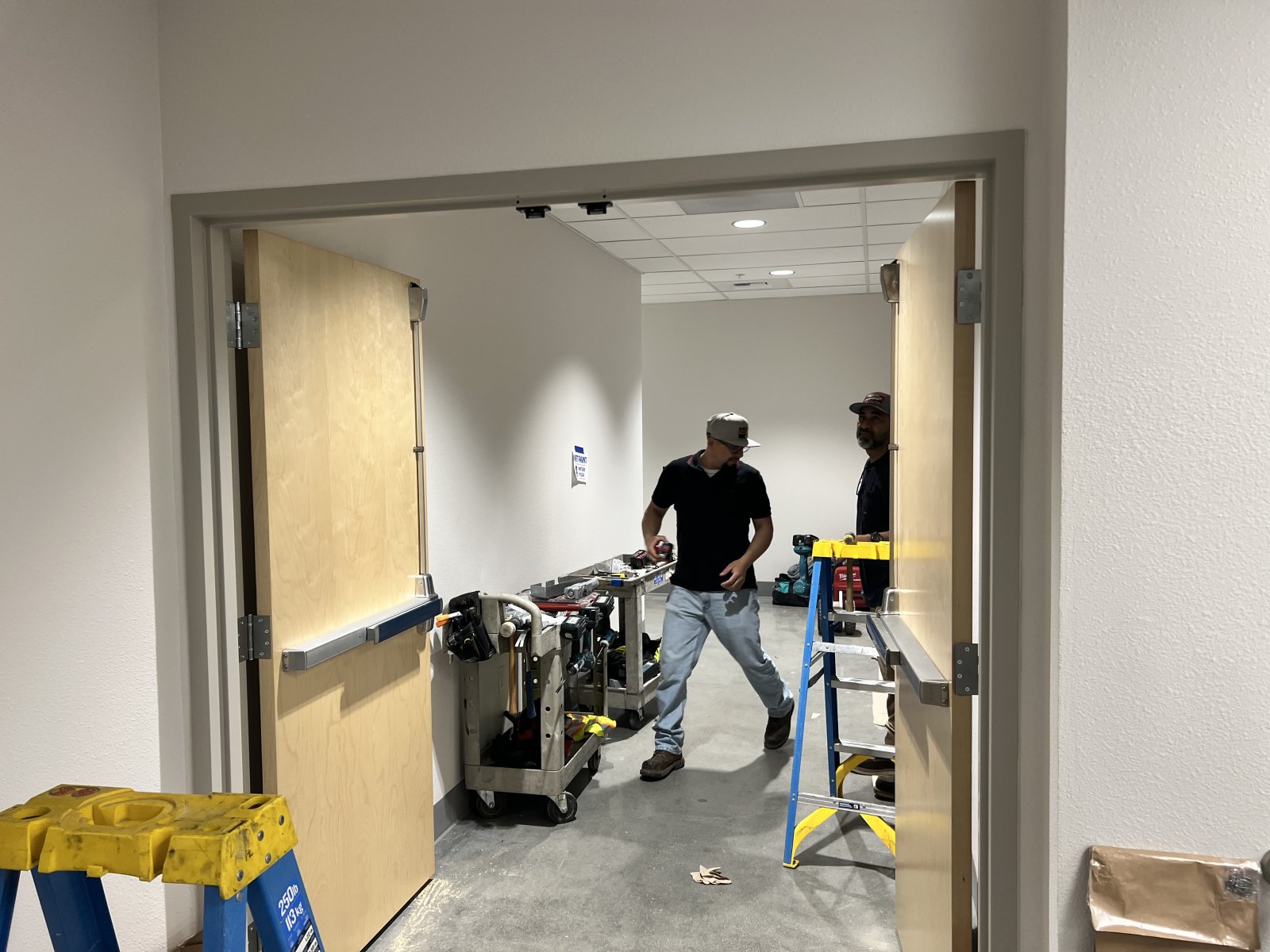
This guide from Cal Royal Hardware breaks down the specification process, from performance grades to an opening-by-opening hardware schedule.
Institutional hardware failures create liability: a failed closer can compromise fire egress, a lock that won't integrate with access control creates security gaps, and worn hinges force costly re-installation.
Why Institutional Hardware Differs From Residential
Residential hardware prioritizes aesthetics and basic function; institutional hardware prioritizes performance under extreme conditions.
A residential entry door might operate 10-15 times daily, a school hallway door 100+ times, and a hospital corridor door 500+ times.
Security requirements differ too: an institutional lock must resist coordinated tampering, support master keying across dozens or hundreds of doors, and integrate with electronic access control.
Key Performance Standards and Grades
The architectural hardware industry uses standardized performance grades to communicate durability and prevent over- or under-specifying.
The primary standard is ANSI/BHMA A156, which defines performance grades for locks, hinges, closers, and exit devices.
The Genesis CGN Series cylindrical lockset from Cal Royal Hardware meets ANSI A156.2 Grade 1 requirements, making it suitable for offices, schools, hospitals, and apartments.

Beyond ANSI grades, look for UL listings on fire-rated doors.
Commercial Door Lock Types and Selection
Institutional buildings use three primary lock types, each suited to different security and operational requirements.
Cylindrical Locks for Schools and Offices
Cylindrical locks are the most common institutional type, mounting through the door face with a cylinder outside and thumb turn inside.
The key advantage is simplicity: a facilities manager can rekey by swapping the cylinder, ideal for schools and offices where keying changes frequently.
Cal Royal Hardware's Genesis CGN Series is a heavy-duty cylindrical lockset engineered for this use case.
Mortise Locks for High-Security Applications
Mortise locks mount inside the door edge in a routed rectangular cavity.
Mortise locks are heavier and stronger than cylindrical locks, with the lock body fully enclosed within the door and protected from tampering.
Mortise locks are mandatory on fire-rated doors in most jurisdictions. The fire rating depends on the complete assembly, door, frame, hinges, lock, and closer, working together.
Keying Systems and Access Control
Buildings with dozens or hundreds of doors need a keying strategy.
A master key system typically has three levels: individual keys (one door), sub-master keys (groups of doors), and a master key (all doors).
Plan for eventual electronic access control even if starting with keyed locks: specify locks that accept electronic cylinders or plan for retrofit electric strikes.
Fire Door Hardware Requirements
Fire doors are among the most misunderstood elements in institutional buildings. Every component, door, frame, hinges, lock, closer, and hardware, must be part of a tested and listed assembly; the wrong hardware voids the fire rating and creates liability.
UL-Listed Components and Certifications
You cannot mix and match: a non-listed hinge or substituted closer voids the rating and certification.
Every component on a fire door must carry a UL label.
Fire door hardware costs more due to testing and certification, but the cost of a fire code violation, failed inspection, or forced retrofit far exceeds the hardware investment.
Exit Devices and Panic Hardware
Exit devices (panic bars) are required on doors that are part of the means of egress, the path people use to exit during an emergency.
Cal Royal Hardware's A6600 Series Rim Exit Device is Grade 1 heavy-duty panic hardware designed for institutional use.

Exit devices must be installed on fire-rated doors as part of the tested assembly.
ADA Compliant Door Hardware Requirements
The Americans with Disabilities Act requires that doors be operable by people with limited strength, dexterity, and reach, affecting handle selection, opening force, and closer settings.
Lever Handles and Accessible Design
ADA regulations require lever handles on accessible doors.
The Genesis CGN Series features full-length 4¾" lever handles with a 3½" rose diameter, meeting ADA requirements for reach and operation.
Beyond the lever, the door frame must allow wheelchair approach: at least 32 inches of clear opening width and no more than 5/8 inch threshold height.
Door Closers and Opening Force
An accessible door must open with no more than 5 pounds of force (measured at the handle).
The solution is a closer with adjustable opening force and a barrier-free (BF) setting. Cal Royal Hardware's 900PBF Series Door Closer is engineered with reduced spring power to meet ADA requirements.

The 900PBF is adjustable across door weights from 30 to 260 pounds and offers factory-preset sizing or field adjustment, so mixed door types don't require stocking multiple closer models.
Hinges, Closers, and Supporting Components
A door is only as durable as its supporting components. Hinges and closers bear the stress of millions of cycles; choosing the right grade and type prevents premature failure.
Heavy-Duty Hinges for High-Traffic Areas
Hinges come in three bearing types: plain bearing, ball bearing standard weight, and ball bearing heavy weight.
Heavy-weight hinges have thicker barrels, tighter tolerances, and more ball bearings per knuckle.
Cal Royal Hardware's BB5200 is a 4½" x 4½" full mortise heavy-weight hinge with 4-ball bearings, meeting ANSI A156.1 standards.
Hinges must match door weight and traffic volume.
Door Closers for Controlled Closing
A door closer controls how fast a door closes and ensures it closes completely.
Door closers are sized by door weight and door width. A 100-pound door requires a smaller closer than a 260-pound door.
Closers come in different mounting configurations: top jamb (above the door), parallel arm (frame-mounted parallel to the door), and regular arm (frame-mounted at an angle).
For institutional buildings, specify a closer adjustable across multiple door sizes and weights.
| Component | Grade 1 Requirement | Institutional Application |
|---|---|---|
| Hinges | Ball bearing heavy weight | High-traffic corridors, exterior doors |
| Locks | Cylindrical or mortise Grade 1 | Offices, classrooms, secure areas |
| Closers | ANSI A156.4 Grade 1 | All institutional doors with closers |
| Exit Devices | ANSI A156.3 Grade 1 | Fire exits, means of egress |
| Door Openers | Barrier-free certified | ADA-compliant accessible doors |
Creating a Door Hardware Schedule Template
A door hardware schedule is a table that specifies hardware for every opening in the building, the single most important document for coordinating procurement, installation, and maintenance.
Opening-by-Opening Specification Process
Start by mapping every door in the building. For each opening, document:
- Opening ID: A unique identifier (e.g., "101A" for room 101, side A)
- Location: What the door serves (e.g., "Classroom 101", "Stairwell A")
- Door type: Hollow metal, wood, glass, etc.
- Door function: Entry, exit, fire-rated, accessible, secure
- Lock type: Cylindrical, mortise, electronic
- Keying: Individual key, sub-master, master
- Hinges: Type, size, quantity, finish
- Closer: Type, size, mounting, adjustments
- Exit device: Required or not
- Finish: Color, material, aesthetic coordination
- Special requirements: ADA accessible, fire-rated, sound-rated, etc.
The schedule becomes the source of truth for your hardware specification: contractors reference it during installation, locksmiths when rekeying, and maintenance teams when replacing worn components. A poorly constructed schedule leads to mismatched hardware, installation delays, and cost overruns.
Coordination With Building Design and Security
Work with architects, security consultants, and facility managers to establish hardware standards before specifying individual openings, preventing conflicts and ensuring consistency.
Electronic access control must be planned during the hardware specification phase.
Security zoning is another coordination point: identify which areas require higher security (executive offices, server rooms, cash handling) and which are public access. This determines lock types, keying strategies, and access control requirements.
Durability, Finishes, and Long-Term Performance
Hardware durability depends on material and finish. The same lock in stainless steel lasts twice as long as painted steel in a coastal environment; choosing the right material for your climate prevents premature corrosion and failure.
Material Selection for Corrosion Resistance
Steel hardware corrodes when exposed to moisture and salt. Stainless steel resists corrosion but costs more.
In dry climates, zinc-plated steel is usually sufficient.
The Genesis CGN Series is available in multiple finishes, including stainless steel options for corrosive environments.
The 900PBF closer is available in architectural finishes including stainless steel.
Finish Options and Aesthetic Coordination
Hardware finish affects both durability and appearance. Common institutional finishes include:
- Satin stainless steel (32D): Contemporary appearance, excellent corrosion resistance, fingerprint-visible
- Polished chrome (26D): Shiny, reflective, requires frequent cleaning
- Brushed nickel (15): Contemporary, low-maintenance, hides fingerprints
- Matte black (19): Modern, bold, hides dirt and fingerprints
- Oil-rubbed bronze (10B): Traditional, warm appearance, hides wear
Document finish choices in the hardware schedule to ensure consistency; mixing finishes across similar openings creates a disjointed appearance.
Choosing door hardware for institutional buildings is a technical specification task, not a shopping task. Hardware must meet performance standards, comply with codes, integrate with access control, and withstand years of heavy use.
Cal Royal Hardware offers Grade 1 institutional hardware engineered for exactly these requirements.
Frequently Asked Questions
What factors should be considered when choosing door hardware for institutional buildings?
Institutional buildings require hardware rated for high-traffic use, fire safety compliance, and accessibility standards. Key factors include ANSI/BHMA grade ratings (Grade 1 for heavy duty), UL fire-door certifications, ADA compliance for lever handles and door closers, and keying systems that support building security. The intended function of each opening, classroom, office, emergency exit, or high-traffic corridor, determines whether you need cylindrical locks, mortise locks, or exit devices. Material durability and finish selection also matter for long-term maintenance.
What door hardware is required for accessible doors?
ADA-compliant hardware includes lever handles rather than knobs, door closers engineered for reduced opening force (typically 5 pounds or less for interior doors), and hardware positioned at specific heights. Lever handles must have a return of at least 1/2 inch and be operable with a closed fist. The Genesis CGN Series Lockset meets these requirements with its full-length lever design. Door closers like the 900PBF Series offer an adjustable delayed-action feature and barrier-free sizing to meet accessibility needs for elderly or disabled users.
How do you choose door hardware for high-traffic areas?
High-traffic areas demand Grade 1 heavy-duty hardware with ball-bearing hinges and robust locking mechanisms. Use hinges with 4-ball bearings, such as the BB5200 series, which provides smooth operation under frequent use. Select Grade 1 cylindrical or mortise locks with clutch mechanisms to prevent handle damage. Exit devices must be ANSI A156.3 Grade 1 rated. Door closers should have adjustable back-check and latching speed to handle continuous opening and closing cycles without premature wear.
What information should be included in a door hardware schedule template?
A comprehensive hardware schedule specifies each opening's function, hardware type, grade, finish, keying, and special requirements. Include columns for door location, function (classroom, office, emergency exit), lock type and model, hinge specifications, door closer details, exit device requirements, fire-rating status, and ADA compliance notes. Add security system integration details and any special hardware like delayed-action closers. This document serves as the coordination tool between architects, contractors, locksmiths, and facility managers to ensure consistent, compliant installation across the building.
How do fire-rated doors affect hardware selection?
Fire-rated door assemblies require UL-listed hardware specifically tested for fire exposure. All components, locks, hinges, closers, and exit devices, must carry UL fire-door certifications. The 900PBF Series Door Closer is UL-listed for fire-door assemblies and meets ANSI A156.4 Grade 1 standards. Exit devices like the A6600 Series are UL-listed for 3-hour fire ratings. Fire-rated doors cannot use standard residential hardware; institutional specifications demand Grade 1 construction throughout to maintain the integrity of the fire assembly during an emergency.
What is the difference between passage, privacy, and classroom locks?
Passage locks have no locking function and are used for areas like hallways where security is not needed. Privacy locks allow occupants to lock from inside but lack outside override capability, suitable for bathrooms. Classroom locks feature outside override capability, allowing teachers or staff to unlock doors in emergencies, and are Grade 1 rated for institutional durability. The Genesis CGN Series Lockset is available in all these functions and meets BHMA/ANSI A 156.2 Series 4000 Grade 1 requirements, making it ideal for schools and institutional buildings.
How should door hardware be coordinated with building security systems?
Modern institutional buildings often integrate electronic access control with mechanical hardware. Specify locks compatible with electronic cylinders or interchangeable cores that accept security system components. The Genesis CGN Series supports interchangeable cores for major systems like BEST, Schlage, and Yale, allowing future upgrades to electronic locks without replacing the entire lockset. Coordinate keying hierarchies with your security plan, specify master key systems during hardware scheduling, and ensure exit devices bypass electronic locks during fire emergencies to maintain life-safety compliance.