Last Updated: November 1, 2026
Quick Summary
A commercial lockset warranty is a manufacturer's written guarantee covering defects in materials and workmanship under normal use for a defined period. It typically excludes damage from misuse, improper installation, and ordinary wear, and mechanical coverage usually runs longer than finish coverage.
- Mechanical coverage generally lasts longer than finish coverage, and higher-grade hardware carries stronger terms.
- Improper installation is the most common reason a legitimate defect claim gets denied.
- Keep proof of purchase, model and serial numbers, and photos of the defect before filing a claim.
- Clean hardware with mild soap only, never abrasive or solvent-based cleaners, to protect coverage.
- Coverage often follows the original purchaser and may not transfer after a building sale.
Table of Contents
- What a Commercial Lockset Warranty Actually Covers
- How Long Commercial Lock Warranties Last
- Commercial Lockset Warranty Exclusions You Should Know
- Lockset Warranty Claim Requirements and the Filing Process
- Commercial Door Hardware Care and Maintenance That Protects Coverage
- Warranty Terms Across Lockset Types and Grades
- Choosing the Right Lockset for Your Coverage Needs
- Frequently Asked Questions
What a Commercial Lockset Warranty Actually Covers
A commercial lockset warranty is a written guarantee from the manufacturer that a lock's mechanical parts and, in some cases, its finish will perform as specified for a defined period.
The distinction matters more than most buyers realize. A warranty is a defect remedy, not a maintenance contract. It does not cover a lever that sags after years of daily traffic, a latch that wears out from misalignment, or a finish that dulls from harsh cleaning chemicals.
Materials and Workmanship Versus Finish Coverage
These are two separate promises, often with very different terms. Materials and workmanship coverage addresses mechanical failure: a latch that stops retracting, a cylinder that seizes, a spring that breaks before its expected service life. Finish coverage addresses the decorative surface, and it is usually the shorter and more conditional of the two.
Finish warranties typically exclude corrosion from environmental exposure, damage from abrasive cleaners, and any change in appearance that the manufacturer considers normal aging. If a coastal building's hardware shows surface oxidation after a few seasons, that is usually classified as environmental, not a defect.
How Long Commercial Lock Warranties Last
Warranty length varies widely by product grade and by which component you are asking about. The practical answer: mechanical coverage runs longer than finish coverage, and higher-grade hardware generally carries stronger terms than lighter-duty products.
Most commercial lockset warranties fall into a few broad categories, though the exact term is always set by the individual manufacturer's written document, not by general industry assumption.
Lifetime Mechanical Versus Limited Term Coverage
A "lifetime mechanical warranty" sounds absolute. It rarely is. In practice, these warranties are almost always limited: they cover the original purchaser, apply only to mechanical function, and exclude finish, labor, and shipping.
Limited-term coverage states a defined period, often expressed in years from the date of purchase. The trade-off is straightforward: a defined term is easier to evaluate and budget around, while a "lifetime" label requires you to read the fine print to understand what is actually promised.
Commercial Lockset Warranty Exclusions You Should Know
Exclusions are where most claims fail. Knowing them before installation is the difference between a covered replacement and an out-of-pocket repair. The common exclusions across commercial door hardware warranties include:
- Damage from misuse, abuse, or vandalism
- Improper installation or failure to follow the manufacturer's instructions
- Improper maintenance or use of incompatible cleaning products
Misuse, Abuse, and Improper Installation
Improper installation is the single most common reason a legitimate defect claim gets denied. A lock installed out of alignment, with the wrong backset, or without proper door preparation puts constant stress on the latch and internal mechanism. The hardware may fail, but the failure traces to installation, not to a manufacturing defect.
If you are installing heavy-duty hardware yourself, following the manufacturer's procedure precisely protects your coverage. Our guide on how to install heavy duty door locks walks through the steps that keep both the lock and its warranty intact. For a deeper look at what actually causes early failures, see our breakdown of why heavy duty locks fail prematurely.
Lockset Warranty Claim Requirements and the Filing Process
A warranty claim is a formal request to the manufacturer to repair, replace, or refund a defective product. Most claims follow a predictable path: identify the defect, gather documentation, contact the manufacturer or seller, submit the claim, and await a determination.
What separates a smooth claim from a rejected one is preparation. Before you call, work through a short troubleshooting sequence so you can describe the failure accurately and rule out installation or maintenance issues that would void coverage.
Troubleshooting Checklist Before You File
- Reproduce the defect. Operate the lock through its full cycle several times. Note whether the failure is consistent or intermittent, and whether it occurs on latch retraction, lever return, cylinder rotation, or finish adhesion.
- Check installation alignment. Confirm the latch bolt enters the strike cleanly, the door does not bind, and the backset matches the preparation. Misalignment is the most common cause of premature mechanical failure and is excluded from coverage.
- Verify the duty rating. Compare the product's cycle rating and grade to the actual traffic on the opening. A Grade 2 lock on a door that sees hundreds of cycles a day is being used outside its intended application.
- Review maintenance records. Confirm cleaning products were mild and non-abrasive, lubrication was limited to approved products, and no unauthorized repairs were attempted.
- Locate model and serial information. The model number, function code, and serial number are usually stamped on the latch face, the rose, or the interior mounting plate. Photograph them before reinstalling the lock.
Documentation Package for a Claim
Assemble the following before contacting the manufacturer or seller:
- The product model number and function code
- The serial number, if the product carries one
- Proof of purchase with the purchase date
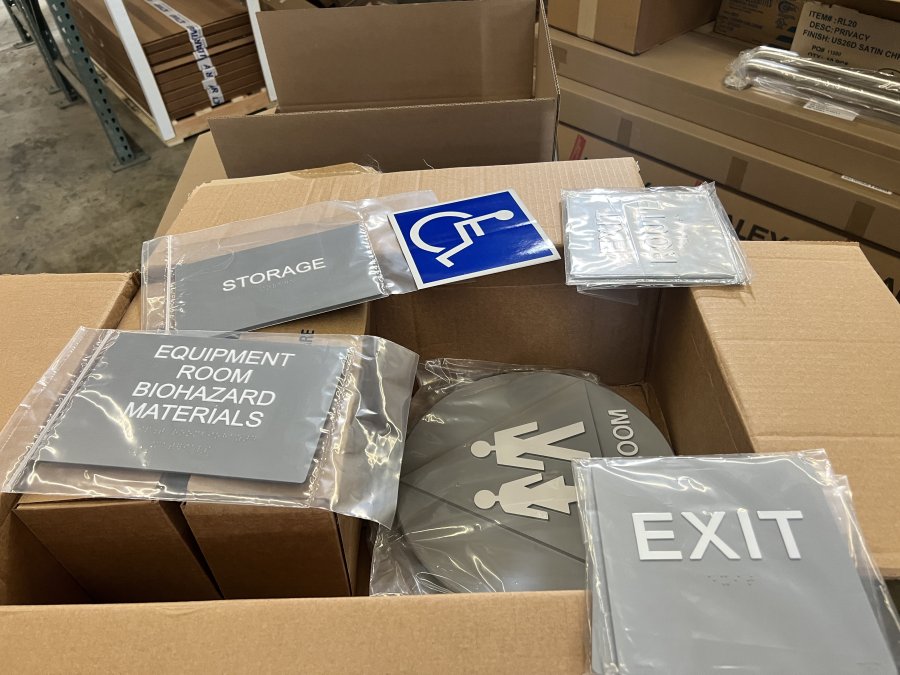
Documentation, Serial Numbers, and Proof of Purchase
Proof of purchase is the anchor of nearly every claim. Without it, manufacturers cannot verify the purchase date, the product's age, or whether it was bought through an authorized channel. Keep receipts, invoices, or order confirmations for as long as you own the hardware.
Registration matters too. Some manufacturers require warranty registration within a set window after purchase. Registering at installation takes minutes and removes a common point of dispute later.
What to Expect After You Submit
Most manufacturers acknowledge a claim within a few business days and then request additional photos or a return authorization number. Keep the defective product until the claim is resolved; do not discard it after removal. If the remedy is replacement, confirm whether the replacement carries the balance of the original warranty or a new term. If the remedy is repair, ask whether the repair is performed by the manufacturer or an authorized service provider, because unauthorized repairs can void remaining coverage.
Commercial Door Hardware Care and Maintenance That Protects Coverage
Routine care is both good practice and a warranty safeguard. Manufacturers expect hardware to be maintained per their instructions, and documented maintenance strengthens a claim if a defect is ever disputed.
A sensible maintenance routine includes:
- Cleaning with a soft cloth and mild soap, never abrasive or solvent-based cleaners
- Periodic inspection of latch alignment, strike fit, and lever return
- Lubrication only with products the manufacturer approves, and only where specified
Keep a simple log of inspections and any adjustments. If a finish or mechanical issue develops, that record shows the hardware was maintained in line with the manufacturer's care instructions, which is exactly what a warranty administrator will ask about.
Warranty Terms Across Lockset Types and Grades
Warranty strength tends to track product grade, but the more useful question for a commercial buyer is how the warranty treats the actual duty cycle of the opening.
| Lockset Type | Typical Grade | Coverage Focus | Best For |
|---|---|---|---|
| Heavy-duty cylindrical | Grade 1 | Mechanical + limited finish | High-traffic commercial doors |
| Standard cylindrical | Grade 2 | Mechanical, shorter finish term | Light commercial, multifamily |
| Mortise lock | Varies by model | Mechanical, component-specific | Institutional, heavy-use openings |
Before you buy, confirm the grade and the warranty document that applies to that specific model. Our guide on how to identify Grade 1 hardware helps you verify what you are actually getting. If you are weighing commercial against residential products, our comparison of commercial vs residential door hardware explains the differences that affect both durability and coverage.
Commercial-Use Eligibility and Duty-Cycle Limits
Many warranties distinguish between residential and commercial use, and some limit coverage when a product is installed on an opening that exceeds its rated cycle count. A lock rated for a certain number of cycles is warranted for that intensity of use; exceeding it can shift a failure from a covered defect to an excluded application error. Before specifying, match the product's cycle rating to the door's traffic pattern, and note whether the warranty explicitly extends to commercial settings or limits coverage to single-family residential use.
Component-Specific Terms Within a Single Product
A single lockset can carry different warranty terms for different components. Mechanical parts such as the latch, cylinder, and chassis often carry the longest term. Finish coverage is usually shorter and more conditional. Electronic and electrified components, where present, frequently carry their own separate term and may require registration or professional installation to remain valid. Read the warranty as a set of component promises rather than a single blanket term.
Transferability and Coverage After Ownership Changes
Coverage often follows the original purchaser rather than the product or the building. For property managers and building owners, that means a warranty may not transfer to a new owner after a sale, and a replacement lock installed by a contractor may carry different terms than the original. Confirm transferability in writing before relying on warranty coverage across an ownership change.
Choosing the Right Lockset for Your Coverage Needs
Match the warranty to the duty cycle, not to the label. A door that sees hundreds of cycles a day needs hardware rated for that traffic, and the warranty should reflect the same expectation.
For buyers who want a clear, grade-rated starting point, the Genesis CGN Series lockset is a Grade 1 cylindrical lever built for office, school, healthcare, and public-building openings, with function codes that let you match access behavior to each door.

Frequently Asked Questions
What does a commercial lockset warranty typically cover?
Most limited warranties cover defects in materials and workmanship under normal use, which usually means mechanical failures like a broken latch, a lever that no longer returns, or a cylinder that stops turning. Finish coverage is often separate and shorter, and wear from cleaning chemicals or environmental exposure is commonly excluded. Labor, shipping, and downtime are rarely included, so read the terms before you specify hardware for a project.
How long do commercial lockset warranties last?
Length depends on the grade and the manufacturer. Grade 1 cylindrical locksets often carry longer mechanical terms than Grade 2 models, and finish warranties are typically shorter than the mechanical warranty. Some brands advertise a lifetime mechanical warranty that applies only to the original purchaser and only for the named defect categories. Confirm the commercial lock warranty length in writing for the exact model you are ordering, since terms vary by product family.
Does improper installation void a commercial lockset warranty?
Yes, in most cases. Installation errors such as an incorrect backset, a misaligned strike, or a door prep that forces the latch are treated as improper installation and fall under exclusions. The same applies to hardware fitted to a door that is warped or out of specification. Following the manufacturer's template and checking door thickness, bore, and strike preparation before mounting protects both the lock's performance and your warranty standing.
Can I claim a warranty without a receipt?
Many programs require proof of purchase, and some also ask for the product model and serial number. Without a receipt, a claim is often denied or reduced to manufacturer discretion. Keep the invoice or order confirmation with the project file, photograph the label on the box, and record the purchase date. For multi-unit properties, a single purchase record covering the order is usually enough to support claims on the locksets in that shipment.
Does a lockset warranty cover finish wear or corrosion?
Finish warranties exist but are usually narrower than mechanical coverage. Normal wear and tear, abrasive cleaners, and corrosion from harsh environmental conditions are commonly excluded. To keep a finish claim viable, follow the cleaning instructions, avoid chlorine-based products, and document any defect with photos. If corrosion appears on a coastal or high-humidity site, expect the manufacturer to review whether environmental conditions caused the failure.
What damage is not covered by a commercial lockset warranty?
Typical exclusions include misuse, abuse, vandalism, improper maintenance, modification, and damage from improper installation. Labor costs to remove or reinstall the lock, shipping costs to return a defective product, and consequential losses such as a rental unit sitting unsecured are generally not covered. Commercial application outside the rated duty cycle can also void coverage, so match the lockset grade to the traffic the opening actually sees.
Specifying commercial hardware means balancing durability, code obligations, and the coverage behind the product. Cal Royal Hardware supplies grade-rated locksets and architectural hardware built for high-traffic openings, with fast distribution and clear function options so you can match each door to its duty. Browse our catalog to find the right lockset and the coverage that fits your project.