Last Updated: November 2, 2026
Quick Summary
Architectural hardware quality is the single most reliable predictor of how a door will feel, function, and hold up over the life of a building. The hinges, closer, lock, and finish decide whether a door swings quietly for a decade or starts sagging and sticking within a season.
- Hardware is the only part of a door assembly that moves every time someone walks through.
- A heavy-weight full-mortise hinge with four ball bearings distributes load better than a plain-bearing hinge.
- Confirm door thickness, handing, backset, lock function, and frame reinforcement before pricing anything.
- Check hinge screws and thru-bolts for tightness every few months in high-traffic areas.
- Compare purchase price against replacement, repair, maintenance, and downtime over the hardware's service life.
Table of Contents
- Why Architectural Hardware Quality Matters More Than Most Buyers Realize
- How Door Hardware Durability Shows Up in Daily Use
- Commercial Door Hardware Selection: Matching Hardware to the Opening
- Security, Access Control and Accessibility Depend on the Hardware
- Door Hardware Finishes: Appearance, Weather Resistance and Long-Term Value
- Door Hardware Maintenance That Extends Service Life
- Lifecycle Cost: Why Cheap Hardware Costs More Over Time
- Choosing the Right Hardware for Your Next Project
- Frequently Asked Questions
Why Architectural Hardware Quality Matters More Than Most Buyers Realize
Architectural hardware quality is the single most reliable predictor of how a door will feel, function, and hold up over the life of a building. Two doors that look identical on opening day can behave very differently after a few years of daily use.
Here's the part most buyers get wrong. They treat hardware as a line item to trim at the end of a project, then spend the next ten years paying for that decision in callbacks, repairs, and replacements.
Below, we'll show you exactly how to judge quality before you buy, so you can spot the difference between hardware built to last and hardware built to a price. For a shortlist of heavy-duty options worth considering, see our guide to best heavy-duty door hardware brands.
How Door Hardware Durability Shows Up in Daily Use
Door hardware durability is best judged by behavior, not by appearance. A quality hinge returns the door to true alignment after thousands of cycles. A quality closer controls the swing the same way on day one thousand as it did on day one. Cheap hardware announces itself early through sag, wobble, and noise.
What Separates Heavy-Duty Hardware From Standard Hardware
The gap comes down to material thickness, bearing construction, and cycle testing. A heavy-weight full-mortise hinge with four ball bearings distributes load across the knuckle far better than a plain-bearing hinge, which is why high-frequency openings specify them.
- Material: thicker leaf stock and heavier-gauge rail assemblies resist bending under repeated force.
- Bearings and mechanisms: ball bearings and clutch designs reduce wear at the points that move most.
- Testing: hardware rated and tested to recognized standards has documented cycle performance, not marketing claims.
Builders Hardware Manufacturers Association standards and product listings publishes the grading framework that separates Grade 1 hardware from lighter-duty products. When a spec sheet cites a grade, you can compare products on equal footing instead of guessing from a photo.
Commercial Door Hardware Selection: Matching Hardware to the Opening
Commercial door hardware selection starts with the opening itself: door weight, width, thickness, traffic volume, and how the door needs to behave. For guidance specific to schools, hospitals, and other institutional openings, see choosing door hardware for institutional buildings.
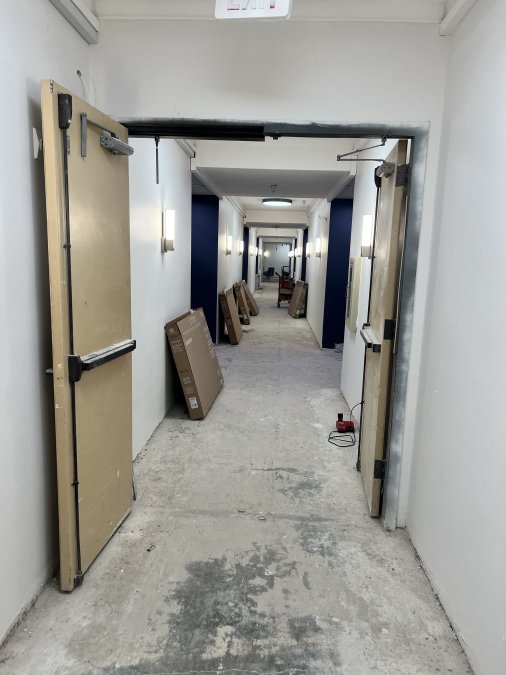
The most common specification failures are not about grade or finish, they are about compatibility. Before you compare products, confirm these details for every opening:
- Door thickness and weight. Standard interior doors run 1-3/4 inches thick, but oversize and specialty doors vary. Hinge leaf stock, closer mounting, and lock bodies must be rated for the actual door weight, not a nominal size.
- Handing. Every lock, exit device, and closer is handed or reversible. Ordering a right-hand lock for a left-hand door is a return and a delay. Confirm handing from the swing side before the order goes out.
- Backset and preparation. Cylindrical locks use a 2-3/4-inch backset in most commercial work, while mortise locks and exit devices require specific preparation. Cross-bore and edge-bore dimensions must match the lock body, or the door must be re-prepped on site.
- Lock function. Entrance, classroom, storeroom, privacy, and passage functions behave differently under key control and egress. Pick the function from how the room is used, not from what is in stock.
- Frame and reinforcement. Closers, hinges, and exit devices transfer load into the frame. Missing reinforcement or a frame not drilled for the mounting pattern leads to sag, misalignment, and callbacks.
- Coordination among components. Hinges, closer, lock, and stop must work as a system. A closer sized for a lighter door, or a stop that does not protect the closer's back-check, shortens the life of every component in the assembly.
For heavier doors and high-frequency openings, a heavy-weight hinge like our BB5200 4-1/2 x 4-1/2-inch full-mortise model with four ball bearings is one option to consider where the door and frame specification supports it. For swing control, an adjustable closer such as the CR441 lets you set spring power to the actual door, with separate closing and latching speed controls.
Before comparing products, confirm these opening details for every door.
| Item | Value | Note |
|---|---|---|
| Standard interior door thickness | 1-3/4 inches | Oversize and specialty doors vary |
| Cylindrical lock backset | 2-3/4 inches | Most commercial work |
| Handing | Handed or reversible | Confirm from the swing side |
| Lock function | Entrance, classroom, storeroom, privacy, passage | Pick from how the room is used |
| Frame and reinforcement | Must match mounting pattern | Missing reinforcement leads to sag |
| Component coordination | Hinges, closer, lock, stop as a system | Mismatch shortens life of assembly |
Security, Access Control and Accessibility Depend on the Hardware
Security and accessibility both live in the hardware, and they pull in opposite directions if you don't plan carefully. A lock that secures an opening must still let people exit freely and operate with minimal force. Readers upgrading protection on a home can see how commercial hardware upgrades home security.
Grade 1 locksets and exit devices, such as the Genesis CGN Series and A6600 Series, are where this plays out.
Accessibility matters just as much.
Door Hardware Finishes: Appearance, Weather Resistance and Long-Term Value
Door hardware finishes do two jobs at once: they set the visual tone of a door and they protect the base metal underneath. A finish that looks right on day one but corrodes or wears through in a year undermines both. One example is our Lifetime Finish Extruded Solid hardware, built to back up that long-term value.
Finish choice should follow environment first, style second. Exterior doors and humid interior spaces need finishes engineered for weather resistance. Interior doors in high-touch areas need finishes that resist wear from constant handling.
American National Standards Institute finish designations for builders hardware provides the standard finish codes (US26D, US32D, US10B, and others) that let you compare products precisely. Using those codes instead of color names prevents mismatched orders across a large project.
Door Hardware Maintenance That Extends Service Life
Door hardware maintenance is mostly about small adjustments made on a schedule, not repairs made after failure. A closer that's properly adjusted and a hinge that's checked for tightness will outlast neglected hardware by years.
A practical maintenance routine looks like this:
- Check hinge screws and thru-bolts for tightness every few months in high-traffic areas
- Test closer closing and latching speed, and adjust the regulating valves as seasons change
- Confirm the door stop is doing its job so the closer's back-check isn't absorbing impact
- Lubricate moving points per the manufacturer's instructions
- Inspect finishes for wear or corrosion and address it before the base metal is exposed
- Verify exit devices latch and release cleanly through repeated cycles
A product like our CR441 Door Closer is built for this kind of upkeep: adjustable size 1-6 spring power, separate closing and latching speed controls, and a standard adjustable back-check let a technician tune it to the opening instead of replacing it.

The maintenance routine matters most when you connect it to lifecycle cost. A closer that is adjusted twice a year and a hinge that is tightened on schedule avoid the failure events that drive replacement: a sagging door that drags the frame, a lock that loosens and needs a service call, or an exit device that stops latching. Each of those events carries labor, downtime, and often a second purchase.
U.S. General Services Administration guidance on facility lifecycle and procurement decisions outlines how public-sector buyers weigh total cost of ownership, a framework that applies just as well to private projects.
Lifecycle Cost: Why Cheap Hardware Costs More Over Time
Lifecycle cost is where cheap hardware loses the argument. The purchase price is only the first number.
Consider what a failure actually costs. A lockset that loosens and needs a service call. A closer that stops latching and lets a door stand open.
U.S. General Services Administration guidance on facility lifecycle and procurement decisions outlines how public-sector buyers weigh total cost of ownership, a framework that applies just as well to private projects.
Choosing the Right Hardware for Your Next Project
Choosing the right hardware comes down to matching four things: the opening, the traffic, the required function, and the environment. Get those aligned and the product selection becomes straightforward. Skip one and you'll feel it in daily operation.
Here's how we'd approach it:
- Measure the opening. Door weight, width, thickness, and frame condition set the baseline.
- Define the function. Decide exactly how the door must lock, latch, and release before picking a product.
- Match the grade to the traffic. High-frequency and heavy doors need heavy-weight, Grade 1 hardware.
- Choose the finish for the environment. Weather resistance and wear resistance come before style.
- Plan for maintenance. Adjustable, serviceable hardware costs less to own.
Best for: contractors, property managers, and facility teams who need durable, code-conscious hardware with fast availability. Skip if: you're replacing a single interior knob and don't need commercial-grade performance.
Frequently Asked Questions
Why does architectural hardware quality matter?
Architectural hardware quality determines how a door actually performs day after day. A well-made closer, hinge set or lockset keeps the door swinging smoothly, latching reliably and closing quietly, while cheap hardware loosens, binds or fails early. Quality also shapes security, accessibility and appearance, so the hardware you choose affects the people using the door, the building's operating costs and how the entry looks for years.
How can you tell whether door hardware is durable?
Look at the specifications, not the marketing. Check the grade rating, hinge leaf thickness and bearing count, closer spring sizes and adjustability, and whether the product is rated for the door weight and traffic level you have. Door hardware durability also shows in the details: separate closing and latching speed controls on a closer, four-ball-bearing hinges on heavy doors, and finishes that are named by their actual base material rather than a decorative label.
What is the difference between residential and commercial door hardware?
Residential hardware is built for lower frequency and lighter doors, while commercial hardware is engineered for repeated daily cycles, heavier doors and stricter accessibility and fire requirements. A Grade 1 cylindrical lockset or a heavy-weight full-mortise hinge carries more material and tighter tolerances than a basic residential equivalent. Matching the hardware class to the building use prevents premature wear and callbacks.
How does door hardware maintenance extend service life?
Regular maintenance catches small problems before they become replacements. Tighten hinge and closer screws, check that closers still control closing and latching speed, clean and lubricate moving parts, and confirm strike alignment so the latch engages without force. On high-traffic openings, inspect hinges for wear and confirm the door swings freely. A simple scheduled check keeps door hardware durability intact and avoids the cost of emergency repairs.
Hardware decisions are easy to postpone and expensive to get wrong. Cal Royal Hardware supplies heavy-duty architectural hardware engineered for long service life, with fast distribution and products built for straightforward installation. Search our store to find the closers, hinges, locksets, and exit devices that match your next project, and get hardware you won't have to think about again.