Last Updated: October 28, 2026
Quick Summary
Grade 1 hardware is the highest durability classification in the ANSI/BHMA A156 series, certified through cycle, strength, and finish testing at the top of a three-level scale. To identify grade 1 hardware, locate the grade marking on the latch faceplate, rose, or chassis housing and confirm the standard number and third-party listing.
- BHMA defines three grades: Grade 1 for high-traffic commercial, Grade 2 for light commercial, Grade 3 for residential.
- A legitimate mark references ANSI/BHMA A156.2 for cylindrical locks or A156.13 for mortise locks.
- Grade 1 units typically use a solid or reinforced latch with a longer throw.
- The spec sheet should state the tested cycle count, not just commercial.
- A fire rating and a Grade 1 rating are separate claims; one does not imply the other.
Table of Contents
- What Grade 1 Hardware Actually Means
- Grade 1 vs Grade 2 Door Hardware: What Changes
- How to Identify a Grade 1 Lock in Five Checks
- Grade 1 Panic Device Requirements for Exit Doors
- Reading a Spec Sheet Without Getting Fooled
- Common Mistakes When Judging Hardware Grade
- Choosing Grade 1 Hardware for Your Next Door Project
- Frequently Asked Questions
What Grade 1 Hardware Actually Means
Grade 1 hardware is the highest durability classification in the ANSI/BHMA A156 series, meaning a lockset or exit device has passed cycle testing, strength testing, and finish testing at the top tier of a three-level scale. If you want to know how to identify grade 1 hardware, the short answer is this: the grade is certified by an independent testing laboratory, stamped or labeled on the product, and backed by a spec sheet that names the standard. Everything else is marketing.
The confusion is understandable. "Commercial grade" and "heavy duty" are unregulated phrases. Grade 1 is not.
The ANSI/BHMA Grading System in Plain Terms
The BHMA standards for architectural hardware define three grades: Grade 1 for high-traffic commercial use, Grade 2 for light commercial and multifamily, and Grade 3 for residential. Each grade carries minimum cycle counts and strength requirements that a product must meet to earn the label. A Grade 1 cylindrical lock, for example, must survive far more operating cycles than a Grade 3 lock. The grade is a tested claim, not a design opinion.
Grade 1 vs Grade 2 Door Hardware: What Changes
In practice, this means a Grade 2 lever might suit a low-traffic office corridor, while a Grade 1 lever belongs on a school entrance or an apartment building's main door. The hardware itself often weighs more, uses a heavier chassis, and carries a longer warranty. If you are comparing grades for a project, it helps to see what the upgrade actually looks like in product form; our rundown of best Grade 1 door exit devices shows the construction differences side by side.
How to Identify a Grade 1 Lock in Five Checks
- Locate the grade marking. Look on the latch faceplate, the rose, or the inside of the chassis housing.
- Read the standard number. A legitimate mark references ANSI/BHMA A156.2 for cylindrical locks or A156.13 for mortise locks.
- Inspect the latch bolt. Grade 1 units typically use a solid or reinforced latch with a longer throw.
- Check the cycle rating. The spec sheet should state the tested cycle count, not just "commercial."
- Confirm third-party listing. A certified product carries a label from a recognized testing laboratory, not a self-declared claim.
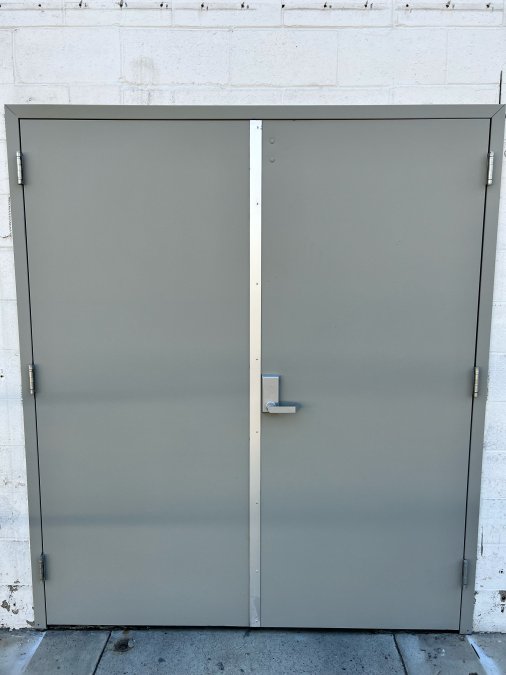
Where the Grade Marking Sits on a Lock
Once you have confirmed a lock meets the five checks, you can browse Grade 1 exit devices that carry the certification and match the door functions you need.
Here are the five checks the article recommends for confirming a lock's grade.
| Check | What to do |
|---|---|
| Locate the grade marking | Look on latch faceplate, rose, or chassis housing |
| Read the standard number | ANSI/BHMA A156.2 for cylindrical, A156.13 for mortise |
| Inspect the latch bolt | Solid or reinforced latch with a longer throw |
| Check the cycle rating | Spec sheet should state tested cycle count |
| Confirm third-party listing | Label from a recognized testing laboratory |
Grade 1 Panic Device Requirements for Exit Doors
The NFPA 101 Life Safety Code governs means of egress and sets the operational expectations for panic hardware. For heavy-duty openings like schools and institutional corridors, a Grade 1 rim exit device is the baseline. Our A6600 Series Rim Exit Device, for instance, uses a steel chassis, a heavy-gauge rail assembly, and a stainless steel latch bolt with a 3/4" throw and anti-pick feature, which is the kind of construction that survives daily institutional use. If you are responsible for installation, our guide on how to install heavy duty exit devices walks through the template and strike alignment steps.
Reading a Spec Sheet Without Getting Fooled
The ANSI standards development process explains how these standards are written and verified, which helps you judge whether a claim is credible. A legitimate Grade 1 closer, for example, will state its adjustable spring power range and its mounting configurations, the way our 900PBF Series lists adjustable size 1-6 spring power and standard, top jamb, or parallel arm installation.
Common Mistakes When Judging Hardware Grade
- Trusting the retailer's label. Store signage is not certification. Check the product marking.
- Confusing fire rating with grade. A fire-rated device and a Grade 1 device are separate claims; one does not imply the other.
- Skipping the function check. A Grade 1 lock in the wrong function still fails the door. Verify the function part number matches how the opening needs to work.
Choosing Grade 1 Hardware for Your Next Door Project
Our Calypso CAL Series covers entrance, storeroom, and passage functions in a Grade 1 cylindrical lever with a clutch mechanism and fixed thru-bolt mounting, available in US26D satin chrome. For a broader look at exit devices before committing, see our buyer's guide to commercial door exit devices. The Genesis CGN Series offers Grade 1 cylindrical lever hardware across entrance, classroom, storeroom, and privacy functions. Readers specifying hardware for a facility can find guidance on choosing door hardware for institutional buildings.
Frequently Asked Questions
What does Grade 1 mean for door hardware?
Grade 1 is the top tier in the ANSI/BHMA grading system used for architectural hardware. It signals that a product passed the highest cycle, strength, and abuse testing in its category, which is why grade 1 hardware shows up on schools, hospitals, and other high-traffic openings. The grade is tied to a specific product category, so a Grade 1 lockset and a Grade 1 closer were tested against different standards. Always confirm the grade against the category you are buying, not just the label.
How can you tell if a lock is ANSI/BHMA Grade 1?
Start with the product literature and the physical stamp. Grade 1 locks usually carry an ANSI/BHMA reference on the latch faceplate, the strike, or the inside rose, and the spec sheet will list the grade alongside the standard number. Ask for the test report or the manufacturer's declaration if the marking is unclear. A lever that feels heavy is not proof of grade, so treat weight as a hint and the paperwork as the answer.
Where is the grade marked on a door lock?
On most cylindrical locksets the marking sits on the latch faceplate or the strike, and sometimes on the inside rose or the lock body itself. Exit devices usually carry it on the touch-bar rail or the end cap. If you cannot find a stamp, check the installation instructions and the spec sheet, because some manufacturers only publish the grade in documentation. Photograph the marking before installation so you have a record for inspections or warranty claims.
Is Grade 1 hardware better than Grade 2?
Grade 1 is built and tested for more cycles and heavier use than Grade 2, which is why it costs more and appears on commercial and institutional doors. Grade 2 is still a solid choice for lighter-traffic openings, and putting Grade 1 on a closet door is money spent for no benefit. Match the grade to the traffic and abuse the door will actually see. The Grade 1 vs Grade 2 door hardware decision comes down to duty cycle, not prestige.
Does Grade 1 mean a lock is pick-proof or more secure?
No. Grade 1 measures durability and mechanical strength under repeated use, not resistance to picking or bumping. A Grade 1 lock can still have a standard cylinder, and security depends on the cylinder, the keyway, and how the door is protected. If security is the goal, pair a Grade 1 lock with a restricted keyway or a higher-security cylinder and confirm the door and frame are reinforced. Grade answers the durability question, not the security one.
What is the difference between Grade 1 locks and Grade 1 exit devices?
They are graded against different standards. A Grade 1 cylindrical lock is tested for cycle count and torque on the lever, while a Grade 1 panic device is tested for touch-bar force, cycle life, and finish durability under egress conditions. That means you cannot compare the two grades directly or assume one rating transfers to the other. When specifying a door, check the grade for each product category separately and confirm the panic device meets the egress requirements for that opening.
Grade 1 hardware is a tested claim, and the only way to verify it is to check the mark, the standard, and the certification. Cal Royal Hardware builds Grade 1 cylindrical locks, door closers, and exit devices with heavy-duty materials, fixed thru-bolt mounting, and adjustable configurations for commercial and institutional openings. Search our store to find the certified Grade 1 hardware that fits your next door project.