Last Updated: November 13, 2026
Quick Summary
The best way to upgrade residential door security without replacing the entire door is to reinforce the weak points a burglar actually attacks: the strike plate, the jamb, the hinges, and the lock itself. Long strike plate screws that reach the framing are the fastest upgrade, followed by a Grade 2 deadbolt and a latch guard.
- Most forced entries split the jamb or pop the strike plate rather than kicking through a solid panel.
- Swap short strike plate screws for longer ones that reach the framing behind the jamb.
- A Grade 2 deadbolt gives you a heavier mechanism and a stronger bolt.
- Replace one screw per hinge with a longer screw and add hinge bolts.
- Confirm door thickness, backset, bore size, handing, and jamb condition before ordering hardware.
Table of Contents
- Start With the Door You Already Have
- 1. Replace Short Strike Plate Screws With Long Ones
- 2. How to Reinforce a Door Jamb at the Strike Side
- 3. How to Reinforce a Door to Prevent Kick In
- 4. Upgrade the Deadbolt to a Grade 2 Lock
- 5. Add a Latch Guard or Reinforcement Plate
- 6. Secure the Hinges With Longer Screws and Hinge Bolts
- 7. Add a Door Security Bar or Secondary Lock
- How to Secure a Front Door From Inside: A Prioritized Plan
- The Bottom Line on Door Security
- Frequently Asked Questions
Start With the Door You Already Have
The best way to upgrade residential door security without replacing the entire door is to reinforce the weak points a burglar actually attacks: the strike plate, the jamb, the hinges, and the lock itself.
Most forced entries split the jamb or pop the strike plate near the lock rather than kicking through a solid panel. A builder-grade door with good hardware often outperforms a heavy door with short screws and a thin frame.
Assessing the Door's Material and Construction
Before buying anything, know what you're working with. A solid wood door or a steel door can take longer screws and heavier hardware. A hollow-core door is a lightweight interior product, and no amount of hardware will turn it into a security barrier. Fiberglass doors fall somewhere in the middle.
Check three things: the material and thickness; whether the door is inswing or outswing, since latch guards and some secondary locks are made for one direction only; and whether there's a glass panel or window near the lock. Glass changes your strategy, since a burglar can break the pane and reach the thumbturn instead of defeating the lock.
1. Replace Short Strike Plate Screws With Long Ones
The fastest upgrade costs almost nothing and takes five minutes. The screws holding your strike plate are usually short, and they only bite into the soft jamb trim, not the stud behind it. Swap them for longer screws that reach the framing, and the whole assembly gets dramatically harder to split.
Here's how we'd do it:
- Remove the two strike plate screws.
- Measure from the jamb face to the framing behind it.
- Choose screws long enough to reach the stud but not so long they split it or poke through an exterior wall.
- Drive them slowly with a drill on a low clutch setting.
- Confirm the door still latches cleanly and the bolt seats fully.
Over-tightening a long screw in an old jamb can crack the wood, defeating the purpose. If the jamb feels soft or crumbly, stop and reinforce the frame first.
2. How to Reinforce a Door Jamb at the Strike Side
Reinforcing a door jamb means transferring the load from the thin jamb trim to the wall framing behind it.
3. How to Reinforce a Door to Prevent Kick In
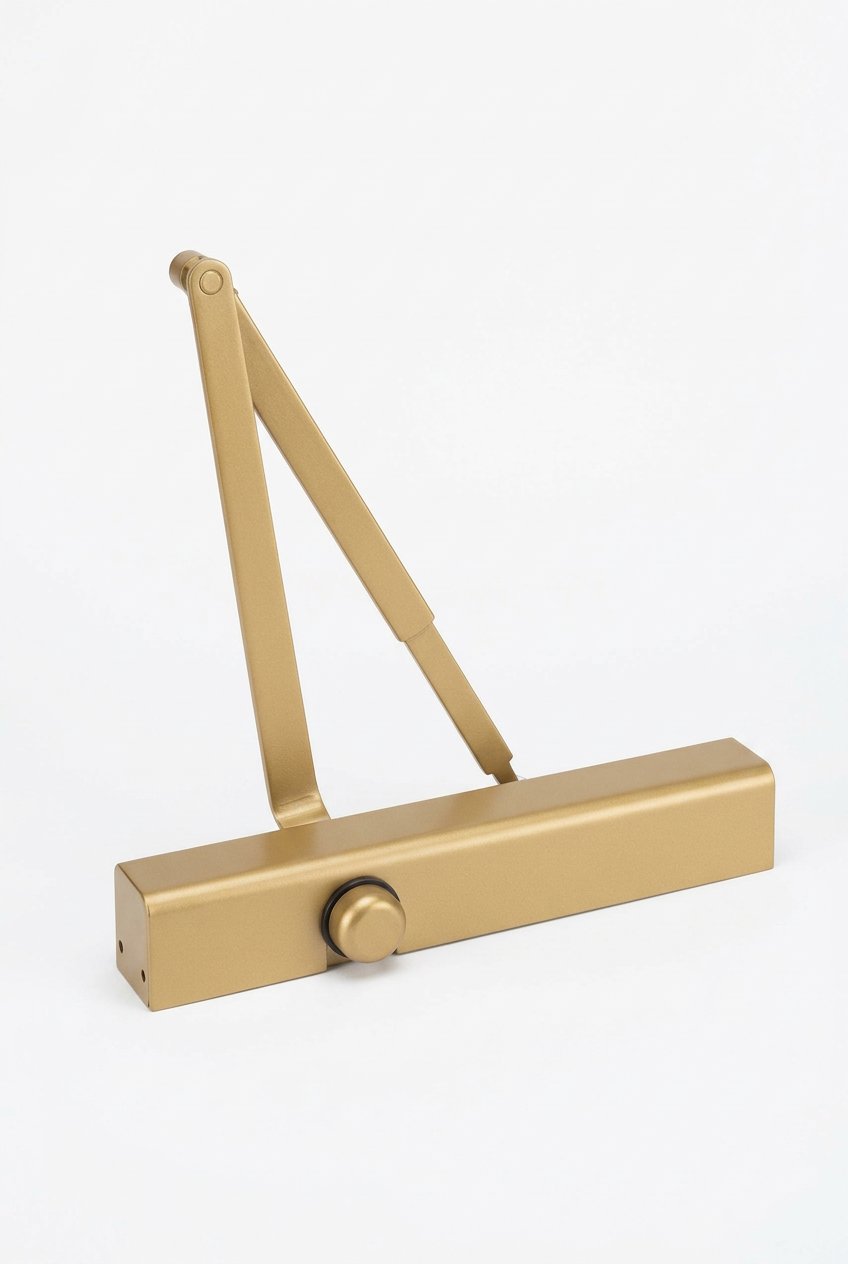
To reinforce a door against kick-ins, make the lock side of the opening resist the force of a blow near the latch. That means three things working together: a strong strike, a solid jamb, and a bolt that fully engages the strike.
- The deadbolt should extend fully into the strike, not just catch the edge.
- The strike should be anchored into framing, not just trim.
- The door should close without being lifted or forced. A door that needs force to latch is misaligned and will fail sooner under stress.
Door alignment matters more than most people realize. If the door sags and the bolt drags, the strike takes the load at an angle and splits more easily. Fix the hinges and fit first, then reinforce.
4. Upgrade the Deadbolt to a Grade 2 Lock
A builder-grade deadbolt is often the weakest lock on the door.
Our pick for most homes is the CAL-ROYAL CB160 Heavy Duty Deadbolt: a single-cylinder deadbolt built to ANSI A156.36 Grade 2, with an all-steel latch case, cast-steel housing, solid-brass 6-pin cylinder, and inside thumbturn.
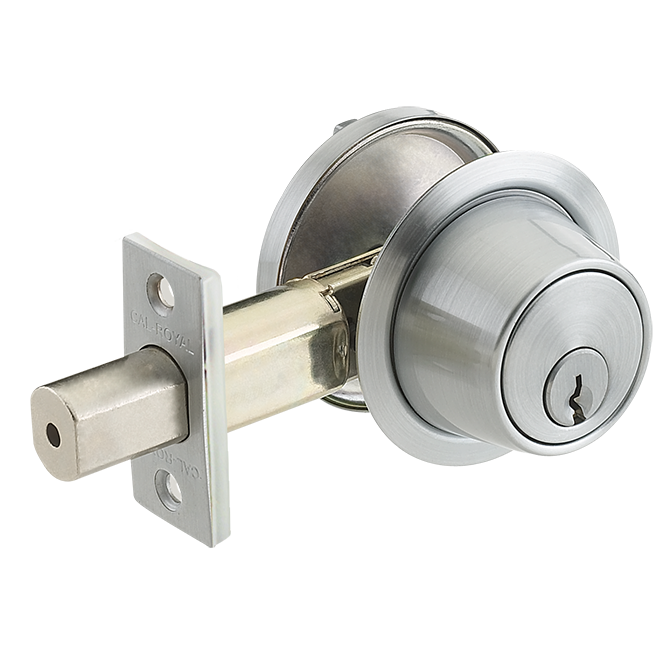
Before you buy, measure. Backset is the distance from the door edge to the centerline of the lock bore, and getting it wrong means the bolt won't line up with the strike.
5. Add a Latch Guard or Reinforcement Plate
A latch guard covers the gap between the door and frame on the latch side, which is where a pry bar or a kick does its damage. On an outswing door, that gap is fully exposed, so a guard earns its place fast.
We stock three versions, and the right one depends on your door and trim:
| Guard | Why it works |
|---|---|
| LPG2 Latch Guard | Covers the latch-side gap with a lock cut-out for trim clearance |
| LG28 Latch Guard | Escutcheon cut-out clears the trim while covering the gap |
| GJLPG2 Latch Guard | Built-in security frame pin helps resist separation |
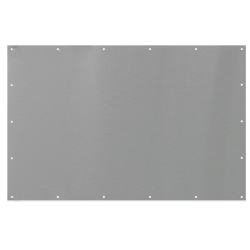
For most homeowners, the Stainless Steel Armor Plates category is the place to start. Measure your backset and compare the plate profile against your trim before drilling.
6. Secure the Hinges With Longer Screws and Hinge Bolts
Hinges are the forgotten weak point. On an outswing door, the hinges are exposed to the outside, and a burglar can pop the hinge pins and lift the door out of the frame.
The fix: replace one screw per hinge with a longer screw that reaches the framing, and add hinge bolts or security studs where the door style allows.
Our Security Bolts category covers the longer screws and bolts for this step.
7. Add a Door Security Bar or Secondary Lock
A secondary lock gives you a barrier that works even if the primary lock is defeated. For a front door, we recommend a door security bar or a swing-bar door guard on the inside, engaged when you're home.
The Die Cast Swing Bar Door Guard is our pick for most entry doors.
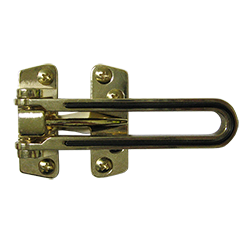
For a lighter option, a solid brass chain door guard works well on residential entry doors.
One trade-off: any secondary lock must stay compatible with emergency exit.
How to Secure a Front Door From Inside: A Prioritized Plan
If you want a clear order of operations, here's how we'd spend the budget. This plan assumes a standard residential entry door with a builder-grade deadbolt and a wood jamb.
| Priority | Upgrade | Approximate Effort | What It Fixes | Typical Material Cost |
|---|---|---|---|---|
| 1 | Long strike plate screws | 5 minutes | Jamb splitting at the strike | Under $5 |
| 2 | Grade 2 deadbolt upgrade | 30-45 minutes | Weak lock mechanism and bolt | $40-$90 |
| 3 | Latch guard or reinforcement plate | 30 minutes | Exposed latch-side gap | $15-$40 |
| 4 | Longer hinge screws and hinge bolts | 20 minutes | Hinge-side pull-out and pin removal | $5-$20 |
| 5 | Door viewer | 15 minutes | Opening the door blind | $10-$25 |
| 6 | Swing bar or chain guard | 20 minutes | Limited opening for strangers | $15-$35 |
Start at the top and work down. The first two items deliver the biggest jump in resistance for the least money, and everything after builds on a frame that's already strengthened.
Budget Tiers
- Under $25: Long strike screws, longer hinge screws, and a door viewer. These address the most common forced-entry points, the strike and the hinges, and let you see who is outside before opening.
- $25-$100: Add a Grade 2 deadbolt and a latch guard, covering the lock mechanism and the latch-side gap.
- $100-$200: Add hinge bolts and a swing bar or chain guard to protect against hinge-pin removal and give a controlled opening for strangers.
Compatibility Checks Before You Buy
Before ordering any hardware, confirm these five measurements. Getting them wrong is the most common reason a retrofit fails.
- Door thickness: Most residential doors are 1-3/8 or 1-3/4 inches. Deadbolts and viewers are sized for one or the other.
- Backset: The distance from the door edge to the center of the lock bore is either 2-3/8 or 2-3/4 inches. The wrong backset won't line up with the strike.
- Bore size: Standard deadbolt bores are 2-1/8 inches. A smaller bore means a different lock or a door prep kit.
- Handing: Inswing and outswing doors take different latch guards and secondary locks. Check the swing direction before buying.
- Jamb condition: If the jamb is soft, cracked, or hollow behind the strike, reinforcement plates may not hold. Fix the jamb first or plan for replacement.
Installation Guidance and Common Mistakes
- Screw length: Long enough to reach the framing stud but not so long they split it or poke through an exterior wall. A 3-inch screw is common for strike plates; measure first.
- Pilot holes: Drill pilot holes in old or hard wood to prevent splitting, using a bit slightly smaller than the screw shank.
- Alignment: After installing a strike plate or latch guard, close the door and check that the bolt seats fully without forcing. A binding door will be left unlocked.
Security Trade-offs and Emergency Egress
Any secondary lock or bar must be releasable from inside without a key. Everyone in the home should practice releasing it. Never rely on a swing bar or chain as the only lock, and never block the primary exit path. In a fire, seconds matter.
When Retrofit Is Not Enough
Reinforcement makes a door much harder to force, but it can't fix a hollow-core door, a rotten frame, or a large glass panel next to the lock. If your door has any of those, hardware helps but replacement may eventually be the better spend.
For matching hardware, browse our Strike Plate W Screws and Security Bolts categories, and measure your door before ordering.
Typical material cost of prioritized door security upgrades
The Bottom Line on Door Security
Door security comes down to the frame, not the slab.
The strike plate and jamb are the most common failure points in a forced entry, so reinforcing them with longer screws and a plate delivers the highest return for the least money.
Before you buy, measure your door thickness, backset, bore size, and swing direction, and check that the jamb is solid.
At Cal Royal Hardware, we stock the heavy-duty architectural hardware that makes these upgrades straightforward, from Grade 2 deadbolts and latch guards to swing bar door guards and door viewers, all built for easy installation and long service life. Measure your door, pick your first upgrade, and work down the list. Get started with Cal Royal Hardware and reinforce the door you already have.
For more on door hardware and security, visit Doors and Specialties.
Frequently Asked Questions
What is the best way to reinforce a door against a kick-in?
The strongest low-cost combination is a reinforced strike plate held by long screws that reach the wall framing, plus a heavy-duty deadbolt. A strike plate screwed only into the thin jamb trim will split away under a kick. Swapping those short screws for ones that bite into the stud behind the jamb spreads the load into the structure. Adding a latch guard on an outswing door protects the gap where a pry tool can reach the latch.
How do you reinforce a door jamb without replacing it?
You reinforce a door jamb by moving the load off the jamb surface and into the framing. Replace the short strike screws with long fasteners that reach the stud, then fit a reinforcement plate or latch guard over the strike area so the force is spread across a larger steel surface. Check that the deadbolt still extends fully into the strike without dragging before you call the job done.
Does a door security bar make a front door safer?
A door security bar or chain guard adds a second barrier that holds the door to a limited opening while it is engaged, which helps during an occupied-room confrontation. It is supplemental hardware, not a replacement for the primary lock, and it does not stop a determined forced entry on its own. Choose a model whose mounting surfaces are solid and confirm it releases easily so it never blocks a required exit.
How can you secure a front door from the inside?
Secure a front door from the inside with a deadbolt that has an interior thumbturn, a viewer so you can check who is outside before opening, and a limited-opening guard such as a swing bar or chain. Keep the primary lock engaged at all times and add the secondary guard only when the door is occupied. Test every device so it releases cleanly and does not interfere with getting out in a hurry.
Which door upgrades are worth the money first?
Start with the strike plate and its screws, because that is where most forced-entry attempts concentrate and the fix costs little. Next, upgrade to a Grade 2 deadbolt such as the Cal-Royal CB160 at $36.00, which exceeds 150,000 cycles and fits 1-3/8 to 1-3/4 inch doors. Add a latch guard on outswing doors, then a limited-opening guard for occupied rooms. Frame and hinge work comes after the lock side is solid.